



A Quick-Assembly Container House is a prefabricated modular building designed to be transported easily and installed quickly on site.
In the container house sector, it matters because time, mobility, and predictable cost often decide whether a temporary or semi-permanent space works in practice.
For living support, site operations, emergency response, and short-cycle projects, this type of structure offers a practical middle ground between tents and conventional construction.
The real question is not whether it is fast to install. It is whether that speed, layout flexibility, and service life match the job you need it to do.
Understanding the basic idea
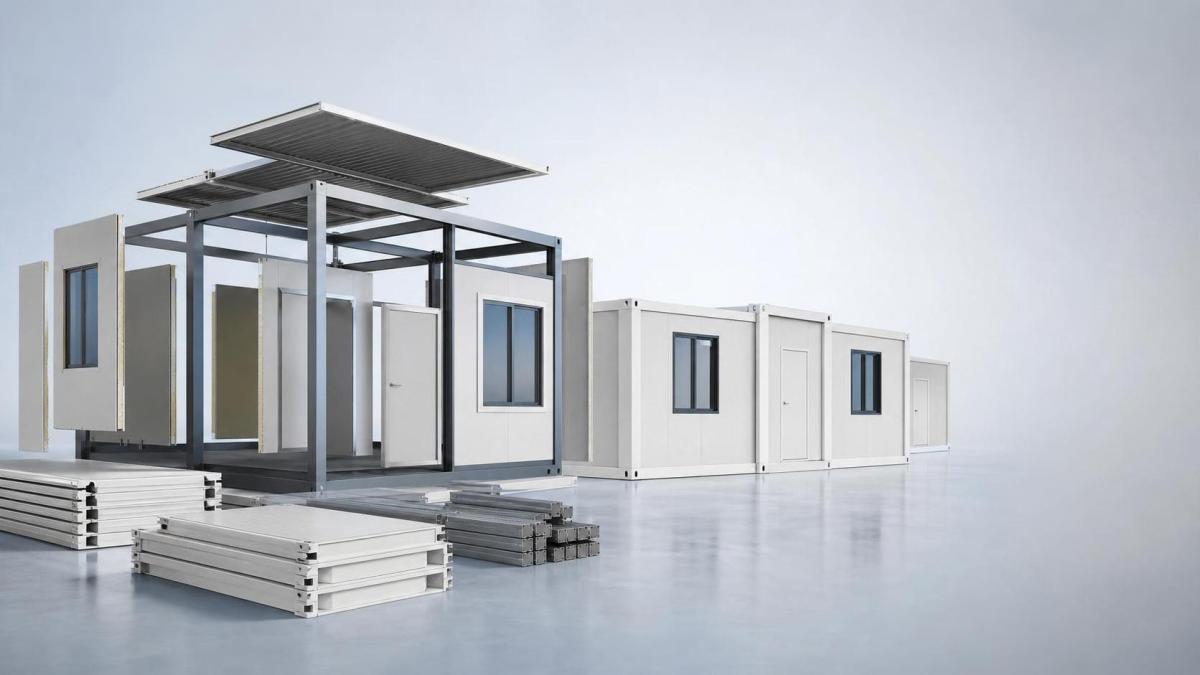
A Quick-Assembly Container House usually arrives as pre-engineered components rather than a fully welded box.
Its frame, wall panels, roof sections, doors, windows, and fasteners are prepared in advance, then assembled on location with standard tools.
This approach reduces transport volume and makes deployment easier in places where access is limited or lifting conditions are not ideal.
Compared with traditional site-built rooms, the installation process is cleaner, less dependent on wet trades, and easier to schedule.
Compared with a shipping container conversion, it gives more freedom in size, internal layout, insulation options, and door placement.
Why the market keeps paying attention
Interest in the Quick-Assembly Container House model is growing because many projects now operate under compressed timelines and shifting site conditions.
A project may need worker housing first, then office space, then sanitation support, all within the same footprint.
That kind of change is hard to handle with permanent construction, especially when land use is temporary.
Another reason is budget visibility. Factory-made modules bring more consistent material use, labor planning, and installation timing.
Even when the initial unit price is not the lowest, the total project cost can be easier to control.
That includes reduced site disruption, faster handover, and fewer weather-related delays.
What makes it useful in real operations
The value of a Quick-Assembly Container House is not limited to speed.
It becomes useful when a project needs repeatable space that can be installed, used, relocated, or expanded without rebuilding everything from zero.
Common advantages include
- Shorter setup time than conventional masonry or concrete rooms.
- Controlled factory production with more stable component quality.
- Flexible internal configuration for sleeping, office, storage, or welfare use.
- Simpler dismantling and relocation when the project ends.
- Better planning for utilities such as lighting, drainage, and ventilation.
These benefits become more visible when space is needed quickly but still must meet daily operational standards.
That is especially true in remote projects, temporary camps, mining support areas, road construction, and industrial expansion zones.
When a Quick-Assembly Container House makes the most sense
Not every project needs this solution. It works best when several conditions appear at the same time.
In simple terms, this option makes sense when flexibility is almost as important as shelter itself.
It also makes sense when the project team wants a more organized alternative to improvised temporary buildings.
Typical uses across container house projects
A Quick-Assembly Container House can support many functions, but the most effective use depends on layout and service planning.
Frequent application scenarios
- Site accommodation for short and mid-term projects.
- Temporary offices near active construction or logistics zones.
- Guard rooms, reception points, or access control spaces.
- Storage rooms for tools, materials, or maintenance supplies.
- Sanitary support modules linked with living or office units.
Sanitation is often underestimated during early planning.
Yet in real use, toilets, showers, and drainage capacity strongly affect comfort and site efficiency.
For projects comparing support facilities, Dual Connected Toilet Unit Specification List can be a useful reference point when evaluating linked modular welfare spaces.
Points worth checking before selection
A Quick-Assembly Container House is practical only when the specification matches the site.
Fast assembly does not remove the need for careful review.
Key questions to ask
- How many people will use the space each day?
- Will the unit stay in one place or move more than once?
- What insulation level is required for local climate conditions?
- Are power, water, and drainage available on site?
- Does the foundation need to be simple, raised, or reinforced?
- Will local codes require fire, electrical, or sanitary compliance checks?
These factors shape performance more than appearance does.
For example, a unit used in a hot coastal area needs different panel, coating, and ventilation choices than one placed in a cold inland region.
Likewise, a sleeping module and an equipment room should not be specified in the same way.
How to evaluate long-term practicality
The best decisions usually come from looking beyond delivery speed.
A Quick-Assembly Container House should be judged by total use value over its service period.
That means checking maintenance demand, repair convenience, replacement parts, and the cost of relocation.
It also helps to review whether the structure can be repurposed later.
A unit first used as an office may later become accommodation, storage, or a sanitary support area.
That reuse potential often improves project efficiency more than a lower purchase price.
In some cases, comparing living modules together with utility units, including another look at Dual Connected Toilet Unit Specification List, helps build a more complete site plan rather than selecting each module in isolation.
A practical next step
A Quick-Assembly Container House makes sense when space must be ready quickly, function reliably, and adapt to changing site demands.
It is most effective when the decision is based on real operating needs, not only on initial speed or price.
A useful next step is to map the intended use, expected occupancy, climate conditions, utility access, and relocation plan before comparing models.
Once those points are clear, it becomes much easier to judge whether a Quick-Assembly Container House is the right fit for the project and which configuration will deliver lasting value.
Please give us a message